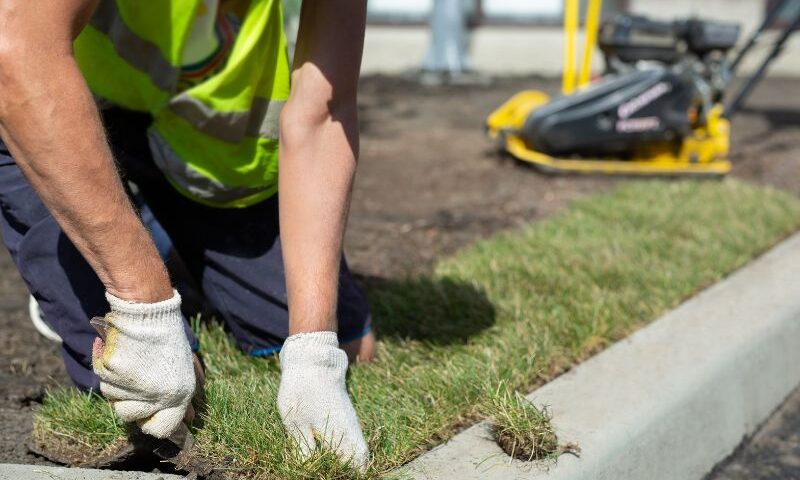
Professional Sod Installation: When Is It Time to Replace Your Lawn?
A few brown spots don’t necessarily mean your commercial property needs new sod. But there comes a point when repeatedly treating weeds, filling bare areas, and repairing damaged turf costs more time and money than starting over. In these situations, professional sod installation can be the most effective solution for restoring your lawn.
So, how do you know when repair is no longer enough?
UF/IFAS offers a useful benchmark: when approximately 30% or more of a lawn consists of weeds, bare areas, or damaged turf, replacement may be more practical than continued repair.
Look at the Entire Lawn
Don’t make the decision based on one problem area. Step back and evaluate the overall condition.
Are bare areas continuing to expand? Are weeds taking over healthy turf? Are you repeatedly paying for treatments without seeing lasting improvement? Does the entrance or another highly visible area consistently look neglected despite maintenance?
When deterioration becomes widespread, a Professional Sod Installation can provide a more practical reset than continuing to patch individual areas.
Sometimes the most expensive lawn is the one you keep paying to repair.
Before Replacing Sod, Find the Cause
This is the step that shouldn’t be skipped.
If the existing turf failed because of poor irrigation coverage, drainage, excessive shade, heavy traffic, pests, disease, or unsuitable grass selection, simply installing new sod may recreate the same problem.
Before approving a Professional Sod Installation, determine what caused the decline and whether that issue needs to be corrected first.
UF/IFAS specifically recommends considering factors such as site conditions, irrigation, soil preparation, turfgrass selection, and establishment when renovating Florida lawns. UF/IFAS Florida Lawn Establishment Guidance
Repair or Replace? Consider the Long-Term Cost
For commercial properties, appearance matters—but so does the budget.
Small isolated areas may make sense to repair. When deterioration affects a significant portion of the property, repeatedly spending money on temporary fixes may not.
The question isn’t simply, “Can this grass be saved?”
Ask instead: “Does continuing to save it still make financial sense?”